What Is a Silent Disco? (How It Works + Benefits Ultimate Guide)

You walk past a venue and see dozens of people dancing, jumping, and singing along to music. But here's the weird part: you hear absolutely nothing. No thumping bass. No DJ announcements. Just silence.

Welcome to a silent disco, one of the most mind-bending experiences in modern nightlife.

A silent disco (also called a silent rave or headphone party) is an event where people dance to music through wireless headphones instead of traditional speakers. Radio transmitters broadcast music directly to each headset. Those without headphones hear nothing, creating the surreal effect of a crowd dancing to "nothing."

Here's where it gets interesting. Most silent discos offer 2-3 music channels playing at the same time. Switch your headphones from Channel 1 (EDM) to Channel 2 (hip-hop) to Channel 3 (throwback hits) with a single button press. Everyone creates their own interactive experience while dancing together.

This guide covers how the technology works, where silent discos thrive, real benefits beyond noise control, and what to expect at your first silent party.

How Silent Disco Technology Works

The system runs on three core components.

Radio Transmitters: These broadcast the audio signal to all headphones in range. Most professional setups use radio frequency (RF) technology, not Bluetooth or WiFi. The transmitter connects to the DJ's audio source and sends music wirelessly. Standard range reaches about 300 meters (984 feet), which covers most venues easily.

Wireless Headphones with Receivers: Each headphone has a built-in RF receiver that picks up the broadcast. Battery life typically runs 6-10 hours on a full charge. The headphones receive signals from multiple transmitters broadcasting on different frequencies.

Multi-Channel System: The transmitter broadcasts on 2-3 different frequencies at once. Each frequency represents a different audio channel. Users switch between channels by pressing a button on their headphones. Different types of headphones offer varying comfort levels and features.

The LED lights on each headphone glow different colors based on which channel you're listening to. Red for Channel 1. Green for Channel 2. Blue for Channel 3. Look across the dance floor and you'll see a color-coded map of what everyone's listening to.

This creates something traditional events can't offer: personalized music choice in a shared space.

What Makes Silent Discos Different from Traditional Events

The differences go way beyond the technology.

Feature Silent Disco Traditional Event
Music Choice 2–3 channels, switch anytime One playlist for everyone
Conversation Remove one ear, talk normally Yell to be heard
Noise Level Outside Nearly silent Heard blocks away
Hearing Fatigue Individual volume control Exposure to loud speakers
Visual Experience Glowing LED headphones Standard lighting
Venue Flexibility Works in restricted areas Needs sound permits

At a regular nightclub, you yell to be heard. At a silent disco, lift one headphone ear and talk at normal volume. The music stays in your headphones while you chat.

This makes silent discos surprisingly social. You can have actual conversations without losing your voice or stepping outside. Learn more about the key differences between these two party formats.

The Multi-Channel Experience (Why 3 DJs Beat One)

Picture this: Three DJs playing simultaneously. Channel 1 spins EDM and electronic dance music. Channel 2 throws down hip-hop and current pop hits. Channel 3 goes deep into classics and throwback jams.

You're dancing to Channel 1 when a song you don't love comes on. Press the channel button. Now you're on Channel 2, instantly vibing to something different. Don't like that either? Hit it again for Channel 3.

The LED color system shows what others are listening to. When everyone around you suddenly turns green, you know Channel 2 is playing something special. This creates "color wars" where crowds naturally form around the most popular channel at any moment.

This solves the impossible problem at mixed-age events. Grandparents pick the jazz channel. Teenagers pick the pop channel. Parents pick the classic rock channel. Everyone dances together while listening to exactly what they want. Need help creating the perfect channel lineup? Different music genres appeal to different crowds.

No other event format gives you this level of personal choice in a group setting.

Where Silent Discos Actually Work Best

Silent discos thrive in places where traditional sound systems fail.

  • Rooftop bars and urban venues: Noise ordinances kill parties after 10 PM. Silent discos let you dance till 3 AM without complaints. Understanding local noise regulations and curfews helps you stay compliant.
  • Residential area events: Block parties and neighborhood festivals can't blast speakers. Headphones solve this instantly.
  • Late-night music festivals: Cities with strict noise curfews use silent stages to keep the party experience going when main speakers shut down.
  • Libraries and museums: Cultural institutions host "quiet" dance parties and evening programming without disturbing operations.
  • Cruise ships: Limited space and noise bleed between decks make silent discos perfect for onboard entertainment.
  • Fitness classes: Silent yoga, cycling, and dance classes let instructors broadcast different intensity levels on separate channels.

The common thread? Any location where traditional speakers create problems but people still want to dance.

Real Benefits of Silent Disco (Beyond Just "Noise Control")

The noise pollution factor gets all the attention, but the other benefits matter more.

  • Noise compliance opens new venues: Host outdoor events past 10 PM in residential zones. Use outdoor spaces that normally prohibit amplified sound. Book locations that say yes to silent discos but no to regular DJs.
  • Accessibility for hearing sensitivities: Some people can't handle loud club speakers. Individual volume control means everyone sets their own comfortable level. This makes dancing accessible to people who normally skip loud events.
  • Multi-generational events actually work: Grandma picks jazz on Channel 3. Kids pick current pop on Channel 2. Everyone dances in the same room without compromise. This makes weddings and family reunions way less awkward.
  • Conversation-friendly design: Remove your headphones mid-song to chat with someone. Put them back on and you're instantly back in the music. Try that at a traditional club.
  • Extended venue options: Conference centers, hotel ballrooms, rooftops, parks, beaches. Places that can't get sound permits suddenly become dance event venues.
  • Reduced hearing damage risk: Club speakers can hit 110+ decibels. That's hearing damage territory. With headphones, you control your exposure. Your ears thank you the next morning.

These benefits stack. A rooftop wedding at 11 PM with grandparents and teenagers all dancing? Silent disco makes it happen.

What to Expect at Your First Silent Disco

The experience follows a simple flow.

  • Check-in and deposit: You'll pay a deposit (usually $50-150) for the headphones. Get a wristband or ticket stub as your claim check. The deposit comes back when you return the headphones in good condition.
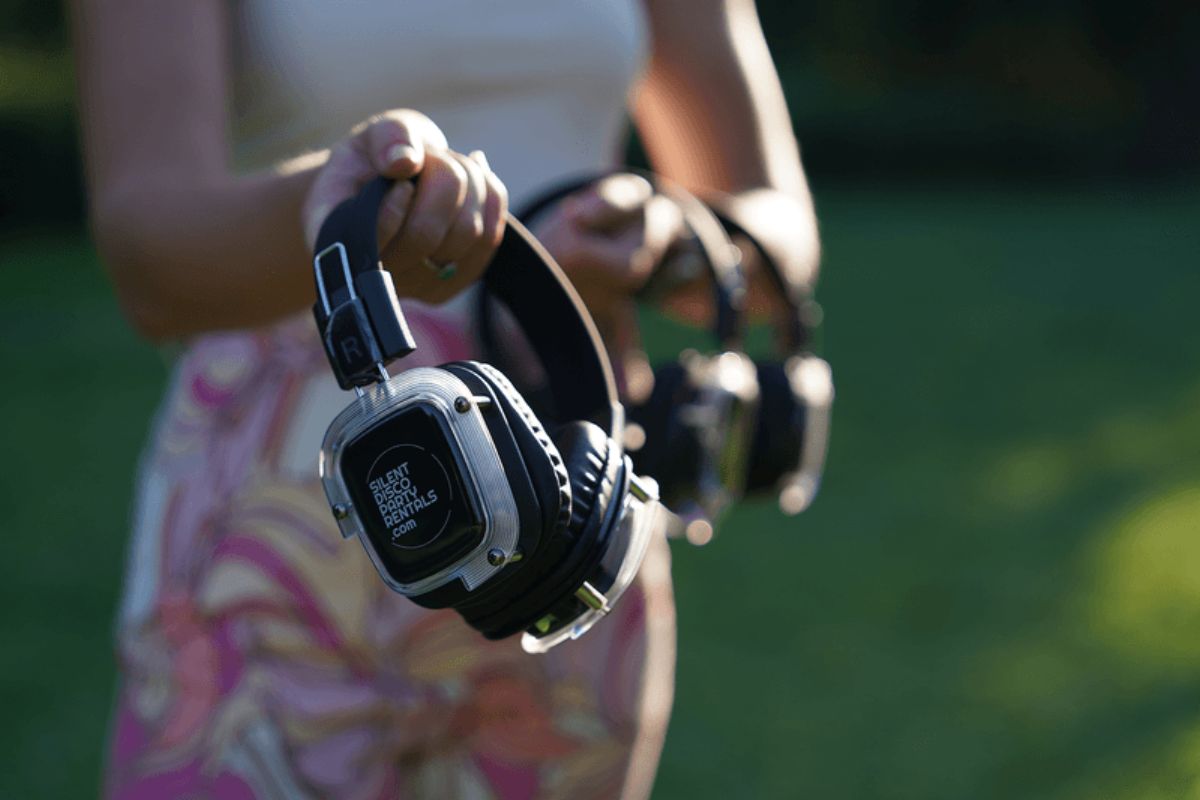
  • Headphone distribution: Staff hands you a pair of wireless headphones. They're typically over-ear style with cushioned padding. The LED lights might already be glowing.
  • Power on and adjust: Press the power button. The headphones light up. Adjust the volume wheel on the side. Fit the headband to your head size.
  • Channel switching: Find the channel button (usually on one ear cup). Press it to cycle through available channels. Watch the LED color change. Red, green, or blue.
  • Join the dance floor: Walk into the venue. The visual hits first; a room full of people dancing to silence. Put your headphones on and suddenly you're in the music. It's surreal at first, then fun within minutes.
  • Etiquette and return: Don't lose the headphones. That deposit gets charged if they disappear. Return them at the end of the night. Staff checks for damage and refunds your deposit.

The "Silent" Paradox (What You'll Actually Hear)

It's not totally silent. You'll hear shuffling feet, people singing along, laughter, and ambient noise. This contrast is part of the charm.

What observers see: People dancing to nothing, mouthing words to songs they can't hear.

What participants hear: Full music in stereo, as loud as they want it.

The disconnect creates the magic. You're in two worlds at once; the silent room and the music in your head.

Hosting a Silent Disco: Equipment and Planning Basics

Hosting your own event requires less than you'd think.

  • Equipment needed: You'll need wireless headphones (minimum 50-100 for a small gathering), at least one transmitter (three if you want three channels), and audio sources like laptops, DJ controllers, or phones. That's it. For detailed guidance on setting up your equipment properly, follow a systematic approach.
  • Rental vs. purchase decision: Rental typically costs $5-15 per headphone. A 100-headphone setup runs $500-1,500 for one night. Buying a full system starts around $5,000-10,000. Rent for one-time events. Buy if you're hosting regularly.
  • Setup complexity: Most systems are plug-and-play. Connect your audio source to the transmitter. Turn on the transmitter. Power up the headphones. That's 30 minutes of setup.
  • Space requirements: You need a dance floor area and a check-in table for headphone distribution. No speaker placement or sound engineering required.
  • Key planning factors: Create a headphone deposit system (cash or card). Set up a charging station if your event runs longer than battery life. Assign staff to handle check-in/check-out. Print clear instructions for channel switching. If you're planning a larger silent disco event, consider additional logistics like staffing and crowd management.

Want to start small? You can host a silent disco at home with just a few headphones and a simple transmitter.

Equipment Quality Red Flags

Watch for these issues when renting:

  • Limited range: Older models might only reach 100-150 feet. That's too short for most venues.
  • Single-channel systems: Why rent silent disco equipment that doesn't offer channel choice? That's the whole point.
  • Poor battery life: If headphones die after 3-4 hours, your late-night event suffers. Confirm 6+ hour runtime.
  • Uncomfortable padding: Cheap foam ear cushions get sweaty and irritating. Check reviews or ask for photos.

Three-channel systems are industry standard for a reason. Don't settle for less.

Silent Disco vs. Regular DJ Events (Cost and Experience)

Both formats have their place.

Factor Silent Disco Regular DJ Event
Setup Cost $500–$2,000 (rental) $500–$3,000 (DJ + speakers)
Venue Flexibility Works in noise-restricted areas Needs sound permits
Noise Complaints Nearly zero High risk after 10 PM
Guest Satisfaction High; everyone picks music Mixed; one playlist for all
Conversation Ability Easy; remove one ear Difficult; yelling required
Hearing Safety Individual volume control Exposure to loud speakers

Silent discos win when noise is an issue, guests have different music tastes, or the venue has restrictions. Traditional setups win when you want unified energy around one playlist and don't face noise limits.

Choose based on your specific situation, not trends.

Common Silent Disco Event Types

The format adapts to nearly any gathering.

  • Music festivals: Late-night stages when main speakers shut down for noise curfews
  • Corporate events: Team building where different departments pick different music channels
  • Wedding receptions: Multi-generational celebrations where everyone finds music they like
  • Fitness classes: Silent yoga, cycling, and dance with instructor audio on one channel, music on another
  • Museum programming: Evening dance parties in galleries without disturbing exhibits
  • Neighborhood block parties: Community events in residential areas with strict noise rules
  • Cruise ship entertainment: Onboard parties without noise bleeding to sleeping passengers

Each takes advantage of what makes silent discos unique: personal choice in shared spaces with zero noise pollution.

Frequently Asked Questions

How much does it cost to rent silent disco headphones?

Silent disco headphone rental costs $5-15 per headphone. A 100-headphone setup for one event typically runs $500-1,500 total.

Can you talk to someone at a silent disco?
Yes. Remove one headphone ear or take them off completely to have normal conversations. Put them back on to return to the music.

Do you need WiFi for silent disco headphones?
No. Silent disco headphones use radio frequency (RF) technology, not WiFi or Bluetooth technology. No internet connection required.

What is the range of silent disco headphones?
Professional RF systems reach 300 meters (984 feet). Cheaper systems may only reach 100-150 feet.

Are silent discos good for weddings?
Yes. Silent discos work well for weddings because different age groups choose different channels. You can also host late-night dancing without noise complaints.

Can you use regular headphones for a silent disco?
No. You need special wireless headphones with built-in RF receivers. Regular headphones lack the receiver technology.

How do you charge silent disco headphones?
Most silent disco headphones charge via USB cables or charging docks. Battery life runs 6-10 hours per charge.

What happens if someone loses the headphones at a silent disco?
You forfeit your deposit, typically $50-150 per lost headphone unit.

How many channels do silent disco headphones have?
Standard silent disco setups offer 3 channels. Some basic systems have only 2 channels.

Are silent discos popular at music festivals?
Yes. Music festivals use silent disco stages for late-night programming when noise ordinances require main speakers to shut down.

Can you use silent disco headphones outdoors?
Yes. RF transmission works outdoors with 300-meter range. Parks, beaches, and rooftops are popular silent disco venues.

What is the difference between a silent disco and a regular party?
At silent discos, music plays through wireless headphones instead of speakers. You control your volume and choose between multiple channels. Regular parties use speakers that everyone hears at the same volume.
Sources

  1. https://hushconcerts.com/hush-vibes/silent-disco/what-is-a-silent-disco/
  2. https://ourdjrocks.com/what-is-a-silent-disco/
  3. https://silentdiscoparty.uk/technology-behind-silent-disco/
  4. https://www.silent-disco-rental.com/what-are-silent-disco-headphones/
  5. https://silentevents.com/about-silent-events/
  6. https://www.reddit.com/r/Cruise/comments/1kch9lq/what_is_a_silent_disco/
  7. https://www.silentdiscokit.co.uk/how-it-works/
  8. https://en.wikipedia.org/wiki/Silent_disco